If you are building, renovating, or buying in La Jolla, sustainability is no longer a side conversation. In this coastal market, luxury now includes how a home performs, how it handles climate realities, and how thoughtfully it fits its site. When design is done well, you do not have to choose between beauty, comfort, and stewardship. Let’s dive in.
Why sustainability matters in La Jolla
In La Jolla, sustainable design is shaped by both lifestyle and local conditions. City climate planning identifies sea level rise, coastal flooding, erosion, drought, extreme heat, and wildfires as key hazards that adaptation work must address. That means resilient design is not just forward-thinking. It is practical.
San Diego’s 2022 Climate Action Plan also sets a community-wide net-zero goal for 2035. City planning materials describe an all-electric reach code for new residential and commercial development, along with a commitment to 100% renewable electricity through San Diego Community Power. For luxury homeowners, this places performance and electrification closer to the center of the design brief.
Water is part of that conversation too. San Diego frames water conservation as an ongoing reality, not a temporary response. The city also expects Pure Water San Diego to supply nearly half of the city’s water locally by 2035, which underscores why efficient landscapes, smart systems, and lower-water planning matter in high-value homes.
Coastal luxury now means integrated design
The most credible sustainable homes in La Jolla do more than add solar panels. They bring together architecture, materials, systems, and landscape in a way that feels seamless. The result is a home that looks refined while also supporting comfort, durability, and long-term efficiency.
This is especially relevant in a coastal setting. Salt air, moisture exposure, and climate risk ask more of the building envelope and the site plan. In La Jolla, sustainable luxury often means designing for daily ease while also preparing for long-term environmental pressures.
Energy performance and indoor comfort
California’s Energy Code increasingly pushes new homes toward electrification, solar, and storage readiness. The California Energy Commission says the code includes requirements for solar photovoltaic systems, solar-ready design, battery energy storage systems, and battery-ready infrastructure. For newly constructed single-family homes, solar photovoltaic systems are prescriptively required, subject to exceptions.
In practical terms, this supports a more modern luxury standard. San Diego’s healthy-buildings guidance highlights replacing gas stoves, furnaces, and water heaters with induction, heat pump water heaters, and heat pumps. These systems can support cleaner indoor air while aligning the home with a lower-emissions future.
For you as a buyer or homeowner, this means sustainable design can improve daily living in very tangible ways. Better indoor air, more stable comfort, and efficient equipment are not abstract benefits. They are part of how a high-performing home feels.
Durable materials for coastal conditions
In La Jolla, material selection is about more than style. Coastal exposure can be tough on finishes and assemblies, so durability becomes part of the luxury equation. The strongest homes often use materials and details chosen specifically for long-term performance near the ocean.
Public La Jolla examples show this clearly. The Green Home used concrete, stainless steel, and wood in a way that supported both design and durability. Dolphin Place added a rainscreen assembly to improve moisture control, while another recent La Jolla renovation selected materials specifically to resist sea-salt corrosion.
These choices matter because repair cycles, weathering, and moisture issues can affect both comfort and long-term value. Sustainable luxury is often quieter than flashy. It shows up in details that age gracefully and work hard behind the scenes.
Water-wise landscape and site resilience
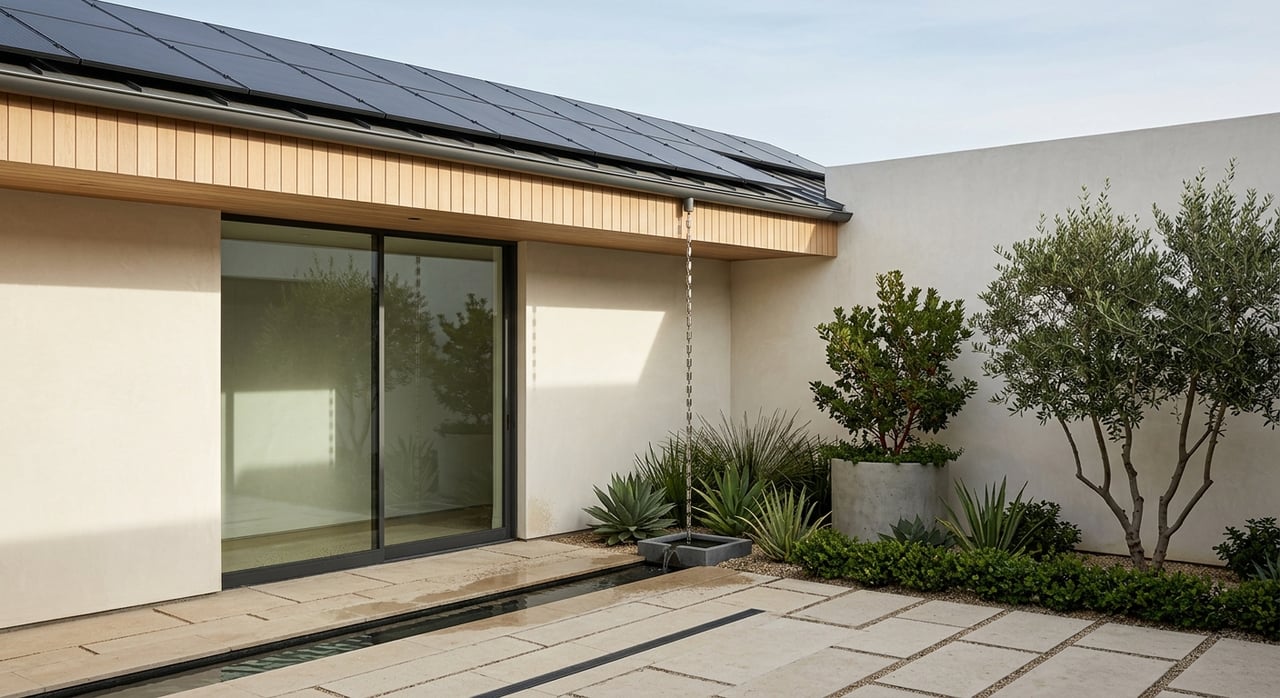
Landscape is one of the biggest opportunities in Southern California sustainability. According to the California Department of Water Resources, about 40 percent of the water Californians use at home is used outdoors. That is why climate-adapted planting, efficient irrigation, stormwater capture, graywater strategies, and recycled water can have an outsized impact.
The state’s Model Water Efficient Landscape Ordinance applies to new development and retrofits, and local agencies must adopt ordinances that are at least as effective as the state model. In a luxury setting, that does not mean giving up beauty. It means designing outdoor spaces that are elegant, site-appropriate, and easier to sustain over time.
San Diego’s own programs also connect trees and nature-based strategies to climate goals. City materials note that trees support carbon sequestration, stormwater runoff reduction, and water conservation, while resilience planning points to living shorelines, habitat restoration, native plantings, and dune restoration as nature-based coastal protections. For homes near the coast, site planning and planting strategy can be just as important as interior finishes.
What sustainable luxury looks like in La Jolla
La Jolla already offers public examples of sustainable coastal homes that feel highly architectural and deeply livable. These homes help show that sustainability here is not theoretical. It is already part of the local design language.
Green Home in La Jolla
Green Home is one of the clearest local examples of sustainability expressed through luxury residential design. It has been described as LEED Platinum and includes reclaimed California redwoods, low-flow showerheads and faucets, dual-flush toilets, LED lighting, rooftop solar tied to radiant heat, abundant natural light, and open windows for passive cooling.
What stands out is how naturally these features fit the home’s lifestyle. The indoor-outdoor connection remains central, and the material palette is local and low-maintenance. This is a strong example of sustainability supporting the experience of the home rather than competing with it.
The Cresta and passive design
The Cresta, architect Jonathan Segal’s oceanfront La Jolla home, shows how sustainable thinking can be embedded in layout and massing. The house uses cast-in-place concrete, a below-grade level, a roof solar array, cross ventilation, sun shading, and thermal mass.
That matters because passive design can reduce reliance on mechanical systems while improving comfort. Wide-opening glass and a courtyard create outdoor rooms and reinforce the idea that performance begins with architecture itself. In this kind of home, sustainability is not an add-on. It is part of the spatial concept.
Dolphin Place and the renovation path
For existing homeowners, Dolphin Place offers an especially useful reference. This 1940s cottage in Bird Rock was reworked with large sliding glass doors, a detached backyard cube, and a rainscreen assembly to improve moisture control.
Its material palette also emphasized durability in a salt-spray environment. That is an important reminder that you do not need to start from the ground up to create a better-performing coastal home. Thoughtful renovation can preserve character while delivering meaningful upgrades.
Clean Living and certification
Clean Living adds another useful proof point for the La Jolla market. It has been described as the third LEED Platinum home built in the city, with the design intentionally scaled as a green residence at the highest level of LEED for Homes certification.
For luxury buyers, certification can bring clarity to the sustainability story. The U.S. Green Building Council says LEED-certified homes are independently verified, are designed for clean indoor air and ample natural light, and typically use 20 to 30 percent less energy than non-green homes. When supported by good design, certification can be part of a credible and measurable value proposition.
What to think about before you build or renovate
In La Jolla, a sustainable project often succeeds because the big decisions are coordinated early. Design, approvals, materials, systems, and site planning all affect one another. A beautiful outcome usually comes from treating these pieces as one conversation.
Here are a few priorities worth keeping in focus:
- Coastal durability: Choose assemblies and finishes with salt air, moisture, and long-term maintenance in mind.
- Electrification strategy: Plan for induction cooking, heat pumps, heat pump water heating, and solar or battery readiness where appropriate.
- Water performance: Prioritize efficient irrigation, climate-adapted planting, and lower-water landscape concepts.
- Passive comfort: Look at orientation, shading, natural light, and ventilation before relying only on equipment.
- Verification: If certification matters to you, define that goal early so it can guide design and construction choices.
Coastal approvals are part of the design story
Because La Jolla sits in California’s coastal zone, the regulatory context matters. Development within the coastal zone generally may not begin until a Coastal Development Permit is issued by the California Coastal Commission or a local government. After Local Coastal Program certification, much of that authority is delegated to the city or county.
For homeowners, this means sustainable coastal luxury is shaped by more than architecture alone. Shoreline policy, coastal access rules, and hazard review may all influence what can be built or changed. In practical terms, the strongest projects balance design ambition with a clear understanding of coastal compliance.
Why this matters for buyers and sellers
If you are buying in La Jolla, sustainable design can signal more than trend awareness. It may point to better comfort, lower water demand, more durable materials, and a home that reflects current standards for stewardship in a coastal environment. Those qualities can be especially meaningful in a market where design excellence and long-term ownership both matter.
If you are selling, the story is equally important. Buyers in the luxury space often respond to homes that connect architecture, wellness, efficiency, and resilience in a credible way. Features such as electrified systems, thoughtful landscape planning, durable coastal materials, and recognized certifications can help frame a property as both elevated and future-aware.
At its best, sustainable coastal luxury in La Jolla is not about making a home feel technical. It is about creating a residence that feels calm, enduring, and well considered from every angle.
If you are exploring a purchase, renovation, or future sale in La Jolla and want a more intentional lens on luxury, Mariah S Franco offers a refined approach that connects design, sustainability, and legacy.
FAQs
What does sustainable luxury design mean in La Jolla?
- It usually means combining efficient systems, durable coastal materials, lower-water landscaping, passive design strategies, and climate-aware site planning in one cohesive home.
Do new La Jolla homes need solar features?
- California’s Energy Code includes requirements for solar photovoltaic systems, solar-ready design, battery energy storage systems, and battery-ready infrastructure, with newly constructed single-family homes generally requiring solar photovoltaic systems subject to exceptions.
Can an older La Jolla home be upgraded sustainably?
- Yes. Public local examples show that renovations can improve performance through electrification, moisture-control assemblies, durable materials, and better indoor-outdoor planning.
Why is landscaping important for sustainable homes in La Jolla?
- Outdoor water use is a major part of household demand in California, so climate-adapted planting, efficient irrigation, and water-wise landscape design can meaningfully improve a property’s overall performance.
Do La Jolla coastal projects need special permits?
- Many projects in California’s coastal zone require a Coastal Development Permit from the California Coastal Commission or a local government, depending on where authority has been delegated under the Local Coastal Program.
Is LEED relevant for luxury homes in La Jolla?
- It can be. LEED-certified homes are independently verified and are designed around features such as clean indoor air, natural light, and lower energy use, which can support a more credible sustainability story in the luxury market.